- People
- Dasharatha - ruler of Koshala, father of Rama, of "the solar race," has no sons by any of his 3 wives
- Janaka - ruler of Mithila and father of Sita
- Vashishtha and Vamadeva - family priests to Dasharatha
- Kaushalya, Kaikeyi, and Sumitra - wives of Dasharatha
- Places
- Koshala - powerful kingdom in Hindustan, ruled by Dasharatha
- Ayodhya - capital city - richly decorated with towering temples and noble palaces, "full of prosperous and happy people"
- Mithila - powerful kingdom in Hindustan, ruled by Janaka
- Sacred acts (I really don't know what else to title it)
- Aswamedha - ceremony in which a horse is sacrificed in offering to the gods so that Dasharatha might be granted sons - successful and the deities promised that he would have four sons
- Deities
- Brahma - a creator god in Hinduism, has 4 faces, creator of the 4 Vedas - one for each of his mouths: https://en.wikipedia.org/wiki/Brahma
- Vishnu - the "preserver" in the Hindu trinity (other 2 = Brahma and Shiva), depicted as having a dark or pale blue complexion and 4 arms: https://en.wikipedia.org/wiki/Vishnu
- Shiva - one of the principal deities of Hinduism, "destroyer of evil and the transformer," depicted with a third eye and a crescent moon on his head, matted hair, and a blue throat: https://en.wikipedia.org/wiki/Shiva
- Indra - Vedic deity in Hinduism, king of heaven, has similar powers as Indo-European deities such as Thor, Zeus, Jupiter, and Odin, celebrated as having killed the great symbolic evil (Asura). Depicted wielding a thunderbolt and riding a white elephant: https://en.wikipedia.org/wiki/Indra
- Maruts - storm deities and the sons of Rudra and Prisni, number varies from 27 to 60, depicted as violent and aggressive and "armed with golden weapons i.e. thunderbolts and lightning:" https://en.wikipedia.org/wiki/Maruts
- Storytelling notes: After reading all of part A I decided that I wanted to try to keep track of all the characters, important places, and deities so that I can have a reference guide for my storytelling. This is just a small sampling because there are just so many names to keep track of. I have a running OneNote doc with all of the names I have come across so far in Part A. If I had included them all this would be a ridiculously long blog post.
- Bibliography: Indian Myth and Legend by Donald A. Mackenzie (1913)
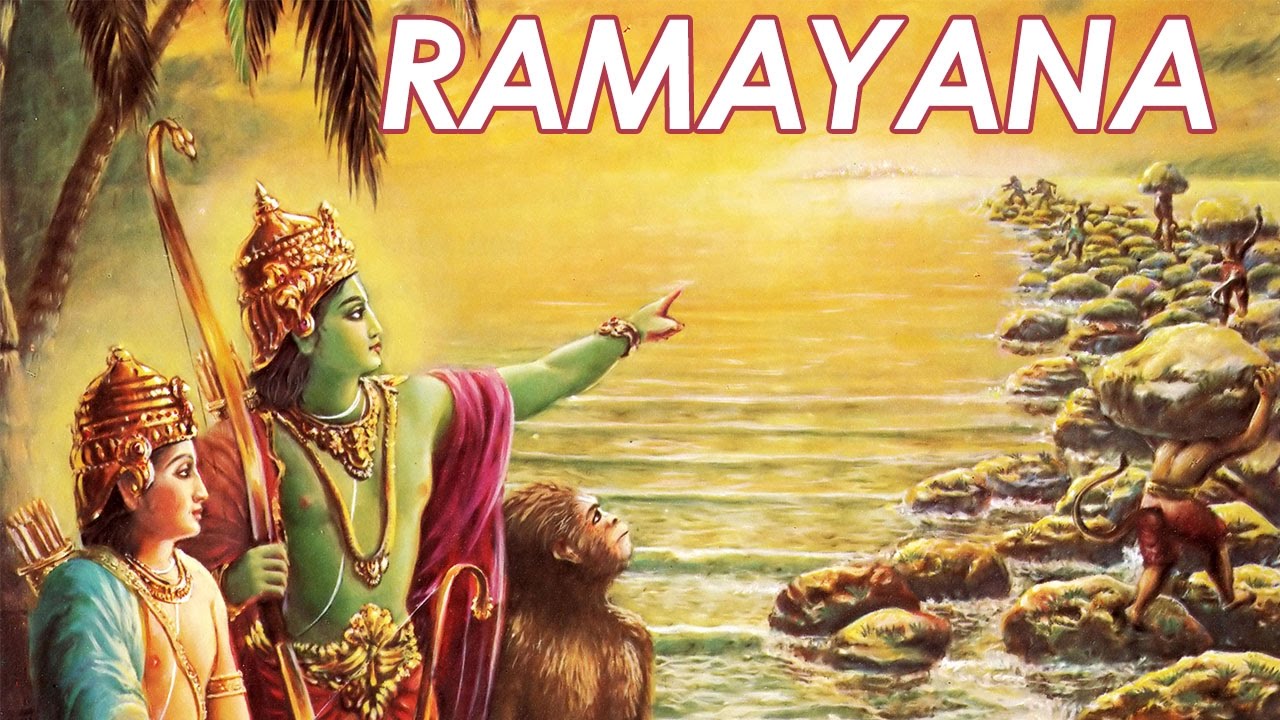 |
| (Ramayana from "10 Epic Events that Happened After the Great Ramayana" on YouTube) |
Comments
Post a Comment